
 Six major trends in distributed photovoltaicsIn the wave of energy transition and sustainable development, distributed photovoltaic, as an important part of clean energy, is reshaping the global energy landscape at an unprecedented rate.
With the continuous innovation of technology, policy drive and growing market demand, the distributed PV field also presents new trends.
1. High-power components “on the roof ”
Under the superposition of high-efficiency technology, the power of photovoltaic modules is rapidly rising, 600W+, 700W+ has become the main product of each component enterprise.
However, high-power components are not only the ‘favourite’ of ground power stations, but also rapidly fly to the roof. On the exhibition site, some head component enterprises clearly put forward ‘700W+ components on the roof’.
According to component companies, distributed PV, especially household distributed, especially favoured high-power components, mainly from the mainstream leasing model, the roof by block rent, for developers, high-power components can not only reduce the rent, and can further reduce the BOS cost, and thus the willingness to promote strong.

2. N-type components leap forward
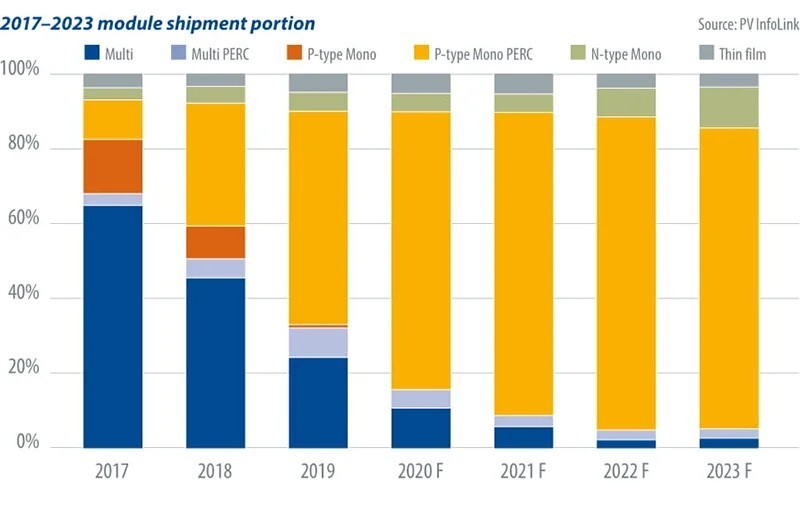
The rapid iteration of p, n-type also reacted quickly in the distributed PV market. According to InfoLink statistics, 2023 p-type and n-type market share of about 71%, 27%, but is expected this year n-type share will rapidly increase to 79%.
In terms of distributed market, according to component enterprise feedback, this year's distributed PV market n-type products accounted for more than 60% or more, ‘the iteration speed greatly exceeds expectations.

3. Segmented market demand is widely concerned
Distributed PV scenarios of the diversity also determines the demand for different component products, which in turn drives component manufacturers to continue to push the envelope.
For example, for the distributed PV power station's easy ash accumulation pain point, LONGi, Jinko, Trina have launched anti-ash accumulation components; to adapt to the hot and humid environment, LONGi newly pushed hot and humid-resistant new products and so on.
In addition, the lightweight flexible components have attracted much attention, and the main push companies include Nanjing Rittal PV, Shangmai New Energy, Pincheng Jingyao and so on.
According to the relevant enterprises, lightweight flexible components of the main market, including the roof and curved buildings with limited load, the current maximum power of up to 500W +, but the price, the price of flexible components is about twice the price of conventional components.

4. Commercial and industrial inverters to higher power
Inverter equipment, in order to further reduce system costs, industrial and commercial inverters from the mainstream 110kW, 125kW to a higher power 150kW, Sunny Power, TBEA, WoWang Electric, Gurui-Watt and so on have exhibited 150kW industrial and commercial string inverters.
And in order to adapt to high-power components, inverter access current continues to rise, the head of the enterprise 110kW string inverter access current has been maximised to 64 amps.
5. Grid connection
Whether from the feedback of equipment manufacturers or developers, distributed photovoltaic business, a major impetus for the rapid rebound undoubtedly comes from the grid access to the push.
As we all know, since the second half of last year, hebei, shandong, heilongjiang, henan, zhejiang, guangdong, fujian provinces have released distributed photovoltaic grid connection carrying capacity warning situation, can be added to open the capacity of the region for 0 continues to spread rapidly.
As a result, the next grid access will be distributed PV competing for the ‘new indicators’, grid carrying capacity will also become an important factor in limiting the installation of new distributed PV.
6. Desk area distribution storage into the market
Centralised convergence outside, can achieve transformer capacity expansion path there are platform distribution storage, that is, usually installed in the distribution transformer where the power distribution station or station, distributed PV overload power generation can not go through the transformer directly stored in the energy storage equipment, thus solving the transformer capacity problem, and can cope with instantaneous load fluctuations in the distribution network and the peak load demand, to improve the stability of the power grid.
According to the relevant enterprise calculation, with a distribution and storage ratio of 15%, the configuration of 200kW/400kWh energy storage system, for example, can increase the distributed PV development capacity of about 1.2MW, the cost of the energy storage system increased by about 0.4 ~ 0.5 yuan / W.
Quality, consumption, distribution and storage, into the market ...... just unfolded in 2024, is undoubtedly another inflection point of distributed PV year, and the healthy and sustainable development of the industry, that is, relying on the policy specification of the government at all levels, but also thanks to the myriad of industry enterprise solutions as well as the innovation and breakthroughs of the business model, multi-party benefit, help zero carbon.
 Temperature & Shading Impact on Mono vs Poly Panels
Understanding Mono and Poly Panels
Before we start analyzing the effects of temperature and shading, it's crucial to first understand the difference between monocrystalline (mono) and polycrystalline (poly) solar panels.
Mono panels are made of single-crystal silicon. Imagine them as the 'purebred' of solar panels. Their composition allows them to convert more sunlight into electricity, making them more efficient but also more expensive.
On the other hand, poly panels are made of multiple silicon fragments melted together. These 'mutts' of solar panels are less efficient due to their fragmented silicon structure. However, their lower efficiency comes with a more affordable price tag, making them a popular choice for many homeowners.
Have you ever stopped to ponder how our everyday weather plays a significant role in solar energy production? Well, grab a cozy spot, for we're about to share some insights that might just help you soak up the sun in the best way possible!
Turning up the Heat: How Temperature Affects Mono Panels
Temperature is a crucial player when it comes to the efficiency of Monocrystalline (or simply Mono) solar panels. Here's an intriguing fact - the performance of mono panels can vary depending upon the temperature around them.
Let's introduce a technical term at this point - 'Temperature Coefficient.' Now, don't let that intimidate you. It's a straightforward concept that indicates how much the efficiency of a panel decreases for every degree above 25°C (that's the optimal temperature, folks!).
Long story short, the blistering summer heat can put a slight damper on your Mono solar panels, mainly due to their high-temperature coefficients. So, for those living under the scorching sun, considering the temperature coefficient while choosing solar panels might be a good idea.
Weathering the Heat: Temperature and its Effect on Poly Panels
Just like their Mono siblings, Polycrystalline (Poly) solar panels see a shift in performance with temperature. Interestingly, Poly panels usually have a higher temperature coefficient compared to Mono panels. Does that mean they are superman against the sun’s heat? Well, not exactly! They're a bit more resilient in higher temperatures, but extreme weather can still affect their efficiency.
Playing Hide and Seek with the Sun: Shading and its Impact on Mono Panels
Shading - a seemingly harmless phenomenon that can disrupt the output of your Mono solar panels. Here's where 'Bypass Diodes' swing into action. These components, tiny but mighty, help minimize shading losses by letting the current bypass shaded cells.
The placement of the solar panels also spells a difference when it comes to mitigating shading. Factors like the direction of the panels, potential shading from nearby structures, and the sun's angle throughout the day should be factored in for optimal performance.
Out of the Shadow: The Influence of Shading on Poly Panels
Poly panels, too, are subject to the whims of shading. Once more, bypass diodes come to the rescue, ensuring minimal shading loss. As with Mono panels, strategizing on the placement of Poly panels can help optimize solar energy capture.
Mono Vs Poly: A Comparative Examination in Varying Climates
When you stack Mono and Poly panels against each other in different climate conditions, some exciting patterns emerge. Mono panels usually boast higher efficiency but lower temperature tolerance compared to Poly panels. Remember though, there isn't a one-size-fits-all solution! The type of panel that suits you most largely depends on your specific local environment and requires careful consideration.
The Winning Strategy: Optimizing Solar Panel Performance
Want to get the maximum bang for your buck from your solar panels? A well-devised strategy is key. Regular maintenance and cleaning are critical for both Mono and Poly panels. Did you know that seemingly insignificant dust and bird droppings can impact your panel's efficiency?
Setting up solar panels also needs some thought. Think of it like setting up a satellite dish - the better the positioning and direction, the better the reception!
Here Comes the Future: Upcoming Developments and Innovations
The solar industry is a hotbed of constant evolution, with continual research and advancements in panel technology. Down the line, we can look forward to improvements in temperature and shading tolerance for both Mono and Poly panels, thereby allowing us to harness solar energy even more effectively!
In summary, temperature and shading significantly impact the performance of both mono and poly panels. By understanding these factors and making informed decisions based on your specific environmental situations, you can optimize your solar panel performance.
Remember, becoming a solar energy user isn't just about installing some panels on your roof. It's about understanding how they work and how to make the most of them. After all, an informed consumer is a smart consumer!
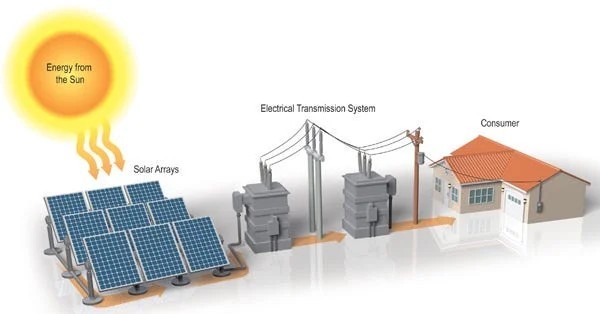
- What are the advantages and application areas of solar photovoltaic power generation?Solar photovoltaic power generation is a technology that directly converts solar energy into electrical energy. The photovoltaic power generation system is mainly composed of photovoltaic cells. When sunlight shines on the photovoltaic cells, photons interact with atoms in the semiconductor material, resulting in the photovoltaic effect, causing electrons to transition from the valence band to the conduction band and form a current. By connecting and combining photovoltaic cells, a photovoltaic cell array can be formed for direct power supply or energy storage.

The advantages of solar photovoltaic power generation include resource renewability, environmental friendliness, low maintenance costs, and the ability to perform distributed generation and diverse applications. Solar photovoltaic power generation can be widely applied in various fields such as residential, commercial, and industrial, and can be scaled up according to demand.
The advantages of solar photovoltaic power generation are as follows:
1.Renewable resource: Solar energy is a renewable energy source with wide distribution and abundant resources.
2.Environmentally friendly: Solar photovoltaic power generation does not produce pollutants such as carbon dioxide and nitrogen oxides, making it environmentally friendly and capable of effectively reducing greenhouse gas emissions and air pollution.
3.Low maintenance cost: Solar photovoltaic systems usually have a long service life and relatively low maintenance costs.
So what are the application areas of solar pv power generation?
Diverse applications: Solar photovoltaic power generation can be widely used in various fields such as residential, commercial, and industrial, and can be scaled up according to demand.
The applications of solar photovoltaic power generation include:
1. Rooftop photovoltaic systems for residential homes and commercial buildings: By installing photovoltaic panels on rooftops, solar energy can be converted into electricity for self-use or fed back to the grid when there is excess electricity.
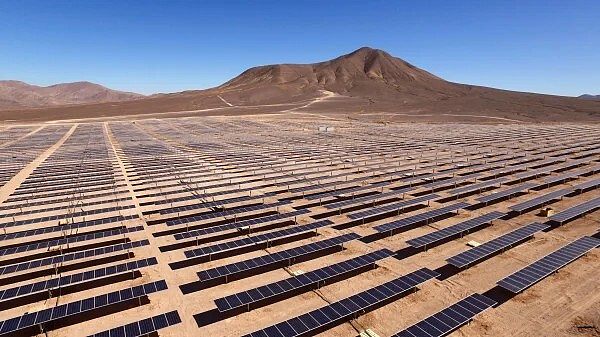
2. Large-scale solar power plants: Solar power plants can be constructed on large areas of land, generating electricity by deploying a large number of photovoltaic panels to supply cities and industrial areas.
3. Off-grid areas: In remote areas, mountainous regions, deserts, etc., solar photovoltaic power generation systems can provide independent power supply to meet the local electricity demand.
4. Mobile applications: Solar photovoltaic power generation systems can be applied to mobile devices such as vehicles, ships, satellites, etc., providing portable power supply.
Despite the many advantages of solar photovoltaic power generation, there are also challenges such as high costs and lower electricity generation during nighttime and cloudy/rainy weather. However, with technological advancements and industrial development, solar photovoltaic power generation technology will continue to improve and be widely promoted, becoming an important component of the clean energy sector.
 Dual-Purpose Rooftops Combining Solar Power & Agriculture
Ever gazed up at a city skyline and wondered about the untapped potential of all those rooftops? Today, let's dive into the world of dual-purpose rooftops, a revolutionary concept that merges solar power with agriculture. As a leading solar panels for rooftop manufacturer, we can't wait to share this frontier of sustainability with you. It's a practice that not only harnesses clean energy but also repurposes often wasted space for food production.
Expanding into the Dual-Purpose Rooftop Approach
If you've ever come across the phrase 'dual-purpose rooftops,' you might've thought it's a complicated concept. But, guess what? It's as straightforward as it's innovative. Imagine blending the advantages of solar power with those of agriculture -right on your roof! The birth of this brilliant idea to simultaneously use rooftops for solar energy harvest and minor agricultural practices like rooftop gardening bridges the gap between two vital sustainable sectors, namely- energy production and food cultivation.
Deciding to install solar panels from an environmentally conscious manufacturer is no small feat as it substantially progresses your journey towards a more sustainable future. What if you could amplify the green impact? Combining agriculture with the installed solar panels amplifies your contribution to local food production, reducing transportation costs while fostering biodiversity. Sounds like a sustainable ace, doesn't it?
Unwrapping the Benefits of Dual-Purpose Rooftops
The pros of dual-purpose rooftops aren't just confined to power generation. It's much more than just contacting a trustworthy rooftop solar panel manufacturer and enhancing your residential or commercial space's energy efficiency. Reflect on this - a majority of rooftops, especially in city landscapes, are often under-utilized. What if we start employing those unused spaces for solar panel installation and rooftop farming? We're talking about transforming idle spaces into sustainability powerhouses!
And wait, there's more! Apart from optimizing renewable energy, you are reducing your carbon footprint and bolstering local food production. Don't forget - maintenance is vital for efficiency. Regular solar panel cleaning guarantees optimum performance with this small routine maintenance, going a long way!
Spotlight: Colorado State University's Pioneering Steps
To dive into understanding the dual-purpose rooftop concept's potential, we can turn the pages to Colorado State University (CSU). Pioneering the sustainability movement, CSU has stepped up its game by integrating solar energy solutions and agricultural practices on campus rooftops. As a result, they have converted multiple roof spaces into eco-friendly powerhouses that generate pollution-free energy and provide fresh, local produce.
The benefits of such an initiative are as clear as crystal - substantial deduction in energy costs, minimizing food transportation, and remarkably, enhancing campus biodiversity. CSU's experiences reiterate that if executed right, dual-purpose rooftops could create a significant difference in the sustainability journey of energy and food production.
Facing the Challenges
Adopting innovative strategies, like dual-purpose rooftops, is not devoid of challenges. Several factors, like the roof's weight load capacity, ensuring ample sunlight for solar panels and plants alike, and maintaining these systems, could pose potential hurdles. However, nothing that some proper planning and efficient design can't conquer!
Collaborating with a reliable rooftop solar panel manufacturer can assure a well-executed installation process, optimized for maximum sunlight exposure. Selection of plants suitable for rooftop gardening is crucial. Incorporating the right blend can help foster a lush green space that feels like a match made in heaven with your solar panels.
Challenges and Solutions
Like any innovative approach, implementing dual-purpose rooftops isn't without its challenges. Potential issues can include weight load on the roof, ensuring adequate sunlight for both the solar panels and the plants, and maintaining the systems. However, with careful planning and design, these obstacles can be surmounted.
By partnering with a reputable solar panels for rooftop manufacturer, you can ensure that the solar system is optimally installed for maximum sunlight exposure. Selection of the right plants for your rooftop garden is also crucial. With the right combination, you can create a thriving green space that perfectly complements your solar panels.
In conclusion, dual-purpose rooftops that marry solar power and agriculture present a sustainable solution for energy production and food cultivation. By following the example set by pioneers like Colorado State University, more institutions and communities can work towards a greener future through such innovative practices.
 Solar energy used to improve education and day-to-day lives in rural Myanmar
Did you know that inhaling the fumes from just one kerosene lamp is equal to smoking 40 cigarettes? More than 1 billion people around the world still need to burn kerosene for light. Together with our partners, we are aiming to replace at least some of these kerosene lights all-the-while improving education, health and livelihoods in Myanmar.
As a company dedicated to spreading solar technologies, sustainability is one of the core values we strive to integrate. We want to support people in thinking sustainably while making a real difference in the world’s energy transition phase.
In January 2019, we embarked on a new journey when we decided to work with Andres Meesak from the Estonian PV association and the NGO Mondo to install photovoltaic systems in Myanmar. This project marks an important step in our quest to spread sustainable growth in developing countries in order to preserve the planet’s resources while truly improving people’s day-to-day lives.
Helping the developing world
Today, Myanmar has one of the lowest electrification rates in Southeast Asia. As of 2018, almost 60% of the nation’s citizens were disconnected from the grid, while those few who were connected, had to endure frequent grid blackouts. A strong boost in power supply is needed to bring electricity to millions of people and help the state’s economy.
For this reason, we have provided PV systems to our partner, the Estonian Solar Electricity Association, who will install them in Namlan, Myanmar.
This town is in the Shan State, a remote rural area inhabited by several ethnic groups. The region is one of the least developed in the world still afflicted by frequent conflicts due to hatred between the different ethnic communities. The conflicts were so severe, that the installation had to be postponed for a few months (it was previously planned for November 2019).
Technology
The installation will consist of two larger systems and ten small off-grid installations with a total power of 25kW. Solarity will provide 90 pieces of Canadian Solar CS6K-275P modules, Victron inverters, and KBE cables. The larger systems will power a local town school and a student dorm. The off-grid systems will be installed to a dozen households in the more isolated villages.
In May 2020, the goods have safely arrived at their destination. They are now safely stored in a local school until the international travel restrictions connected with COVID-19 are lifted.
Empowering local communities
Despite the fact that the school and dorms are connected to a public grid, the locals need to use diesel generator sets almost every day as the grid is very unstable. By replacing diesel with solar, the community will secure a consistent power supply without any noise, power cuts, or air pollution. The new power source will not only be environmentally friendly and reliable, but it will also help cut back on fuel costs on a long-term basis.
We will supply a small local off-grid set consisting of a solar panel, a battery and a few LED lights to a dozen students’ families that do not have access to electricity. In addition to the solar systems, 20 pieces of Maple 3 devices will be donated by Canadian Solar. Maple 3 is a portable lighting and charging solution that can be used as a standard light, an SOS signal, or even as a mobile power-bank. For families with no access to electricity, this device may become a useful home-based solution.
Thanks to the solar systems and the Maple devices, children will be able to study even after dark. The new systems will also help their parents to work, run small businesses or use home appliances long after the sun has set without worrying about the cost.
Ensuring sustainable development
For a long-term, safe, and reliable energy solution, it is crucial to invest in teaching local servicemen to look after the installed solar systems. Thanks to extensive knowledge-sharing seminars planned by our partners from the Estonian PV Association, a local technical team will be trained onsite to resolve any maintenance issues that could arise in the future.
The installation was set to occur in February 2020, but due to the COVID-19 situation, the project had to be postponed. In autumn, once the pandemic is hopefully over, we are planning to go to Myanmar and install those systems together with our partners. We at Solarity are looking forward to updating you on the progress of this project in our future blog posts!
 Challenging & Overcoming Barriers in Solar Panel Adoption
In the 21st century, the shift towards sustainable and renewable energy sources is no longer a luxury but a necessity. Amidst the myriad of renewable energy sources, solar energy has recently seen significant advancements. Solar panels, meticulously crafted by dedicated solar panels dealers using increasingly efficient technology, are gradually becoming an integral part of our urban and rural landscapes. Yet, the adoption of solar panels is not as widespread as it could be. This blog post aims to delve into the barriers obstructing the path of solar panel adoption and to explore potential strategies to overcome these challenges.
The High Upfront Costs
One of the most formidable barriers to the widespread adoption of solar panels is the high upfront costs associated with their installation. These costs can be quite daunting and may deter individuals, businesses, and even some governments from investing in solar energy, despite the undeniable long-term benefits and savings. However, all is not lost. There are solutions available. Government incentives, tax credits, and various financing options are making solar panels more affordable and accessible to the masses. For example, net metering programs allow homeowners to sell excess solar energy back to the grid, significantly reducing their electricity bills and accelerating their return on investment. Additionally, solar panels suppliers are also consistently striving to reduce costs and improve efficiency, making the initial investment more manageable and appealing.
Regulatory Hurdles
The path towards mass solar panel adoption is not devoid of regulatory challenges. Complex permitting processes, drawn-out inspections, and numerous regulations can significantly slow down installations and discourage potential adopters. Streamlined and standardized regulations that simplify the process and encourage more widespread adoption are urgently needed. This calls for the collaboration between policymakers, regulators, and solar panels manufacturers to transform this vision into a reality. One potential solution is the implementation of "one-stop-shop" permitting processes, where all necessary approvals can be obtained through a single entity, reducing bureaucratic red tape and expediting installations.
Lack of Public Awareness
Unfortunately, a lack of public awareness and understanding regarding solar energy often hinders its mass adoption. Misconceptions, misinformation, and a general lack of knowledge create barriers that prevent individuals and businesses from fully embracing solar panels. This is where the role of education and outreach programs becomes paramount. Schools, colleges, universities, and community centers need to incorporate programs that focus on increasing public awareness and knowledge about the benefits and technical aspects of solar energy. These programs can dispel common myths, showcase real-world examples of successful solar installations, and provide clear and concise information about the financial and environmental advantages of switching to solar power. Additionally, community-based initiatives and peer-to-peer learning opportunities can empower individuals to share their experiences and encourage others to consider solar energy as a viable and sustainable option.
Limited Access to Information
In today's world, information is power. However, finding reliable, comprehensive, and easy-to-understand information about solar panel adoption can be a daunting task in itself. There is a pressing need for easily accessible resources, such as online platforms, community workshops, or even simple brochures, to provide accurate information about solar panels. Solar energy organizations, along with government agencies, need to take the helm in disseminating this information effectively and efficiently.
Overcoming Financing Challenges
Financing challenges pose another significant barrier to solar panel adoption. However, there are innovative strategies such as power purchase agreements (PPAs), leasing options, and community solar programs that can help overcome these challenges. Furthermore, financial institutions can play a critical role in offering favorable loan terms and innovative financing models, making solar panel adoption more accessible.
Addressing Grid Integration
Integrating solar energy into the existing power grid presents its own set of challenges. Infrastructure upgrades, grid modernization, and the development of advanced energy-storage systems are necessary to accommodate increased solar panel adoption. It is here that the importance of collaboration between energy providers, policymakers, and technology experts comes into play. Together, they can address these grid integration challenges and pave the way for a smooth transition towards solar energy.
Encouraging Policy Support
Government policies play a pivotal role in promoting solar panel adoption. Supportive policies, such as feed-in tariffs, renewable portfolio standards, and subsidies can incentivize solar panel adoption, making it a more attractive option for households and businesses alike. Some regions have already seen success with these policies, serving as an inspiration for others to follow suit.
Community Engagement and Collaboration
Community engagement and collaboration are indispensable in overcoming barriers to solar panel adoption. Community solar projects, collective purchasing programs, and local initiatives can make solar panels more accessible and affordable. Numerous successful community-driven initiatives have already facilitated solar panel adoption, demonstrating the immense power of collective action.
Conclusion
While there are certainly barriers to solar panel adoption, they are not insurmountable. With concerted efforts from policymakers, solar panels manufacturers, financial institutions, and communities, these challenges can be overcome. The future of solar energy is bright, and with continued advancements and increased adoption, we can look forward to a more sustainable future powered by the sun. The road towards solar panel adoption may be riddled with obstacles, but with the right approach and collective will, we can navigate this path successfully, ushering in an era of clean and sustainable energy.

Leave A Message
If you are interested in our products and want to know more details, please leave a message here, we will reply you as soon as we can.